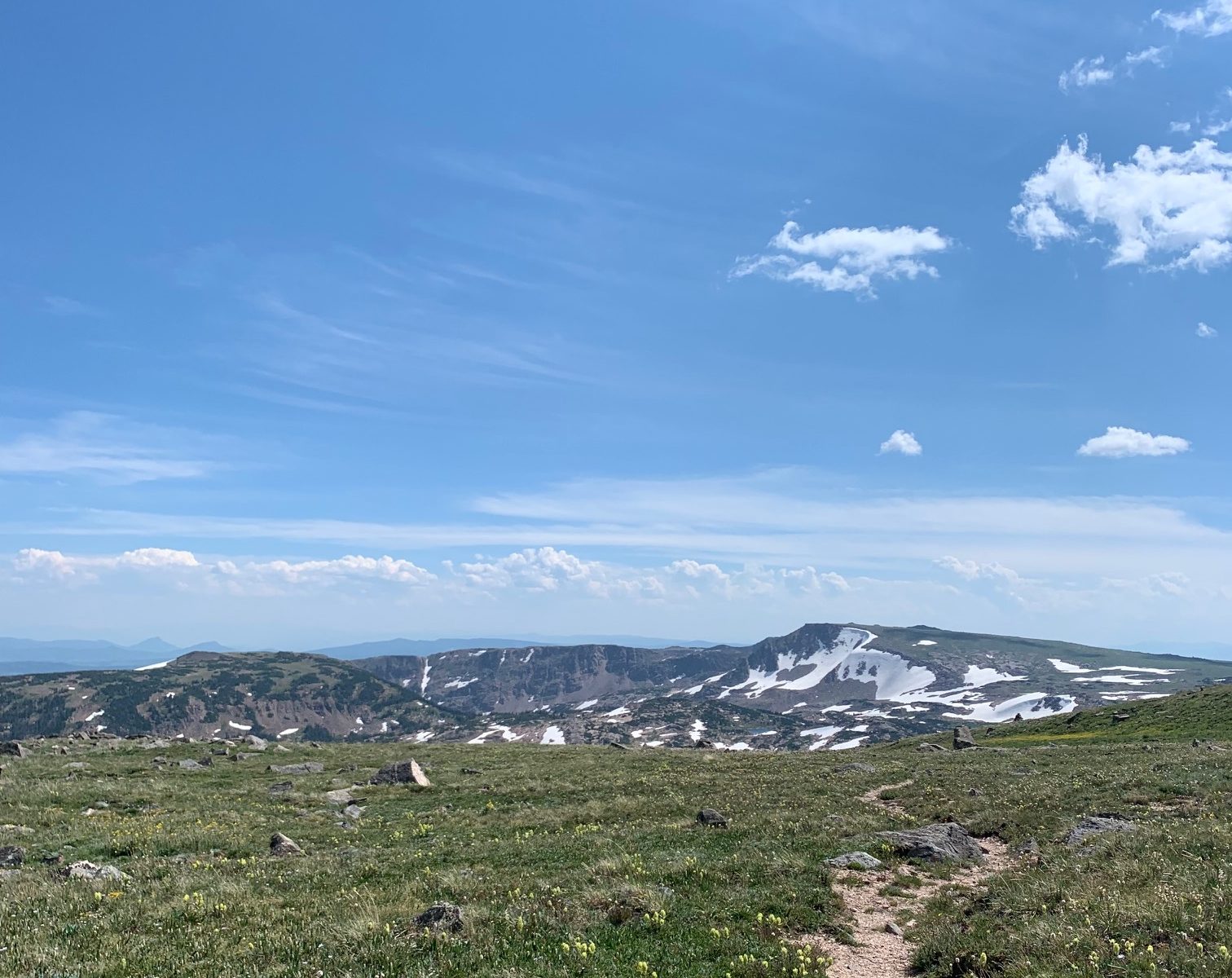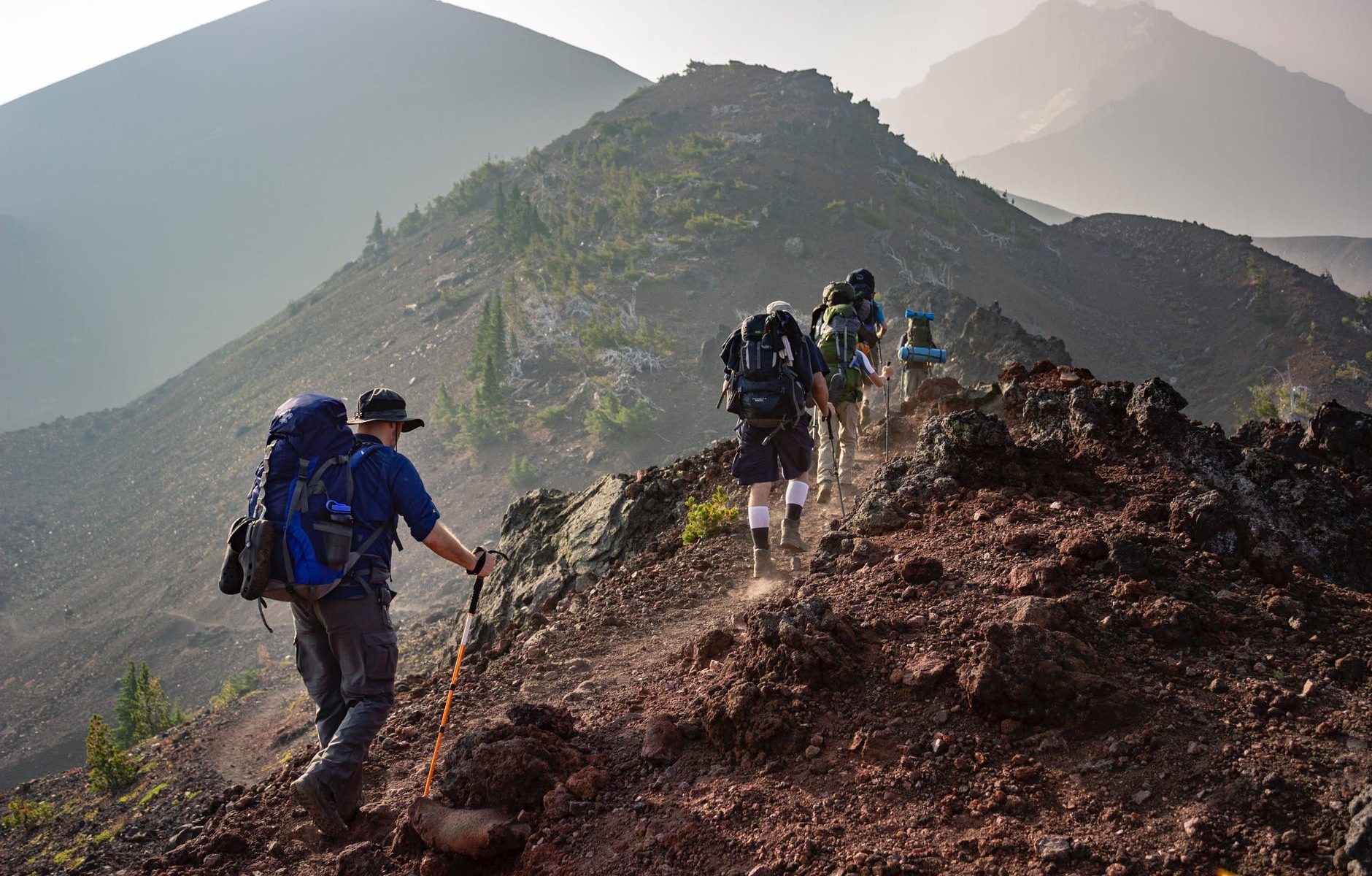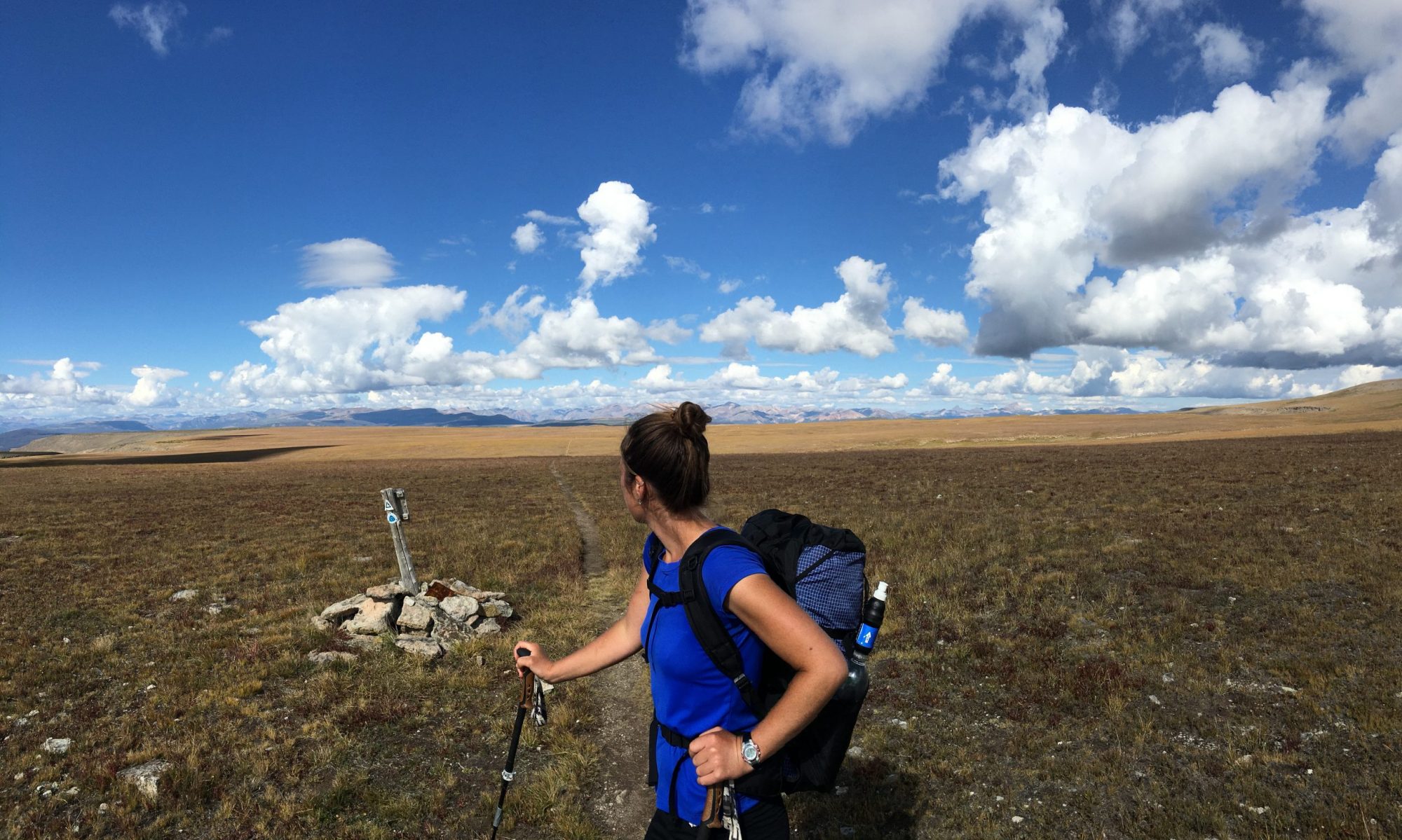

We are taught that healing is a climb—a steady, upward trajectory toward a summit called “Perfect Health.” We think that if we just pack the right gear, follow the strict protocols, and exert enough willpower, we’ll eventually reach the peak and stay there.
But that’s generally not how the body works, especially when it comes to navigating chronic illness or injury, or just run-of-the-mill aging. We encounter false summits. We hit valleys we didn’t see on the map.
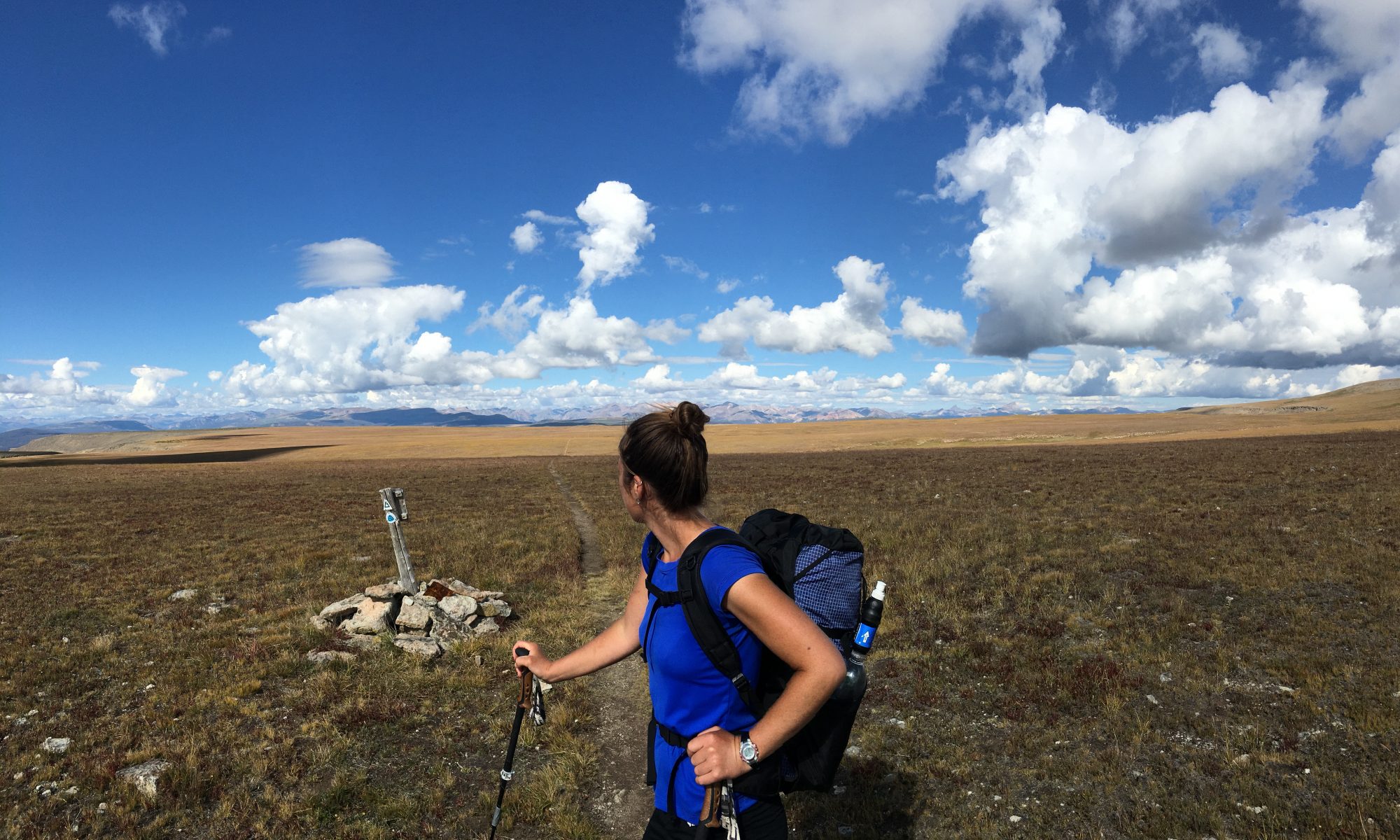
Last September, on a 13,000-foot ridge in the Sangre de Cristo mountains, I hit one of those valleys. And it resurfaced a question that’s hit me before when my body has failed to “perform”: who am I, and what value do I have, when my endurance and strength are gone?
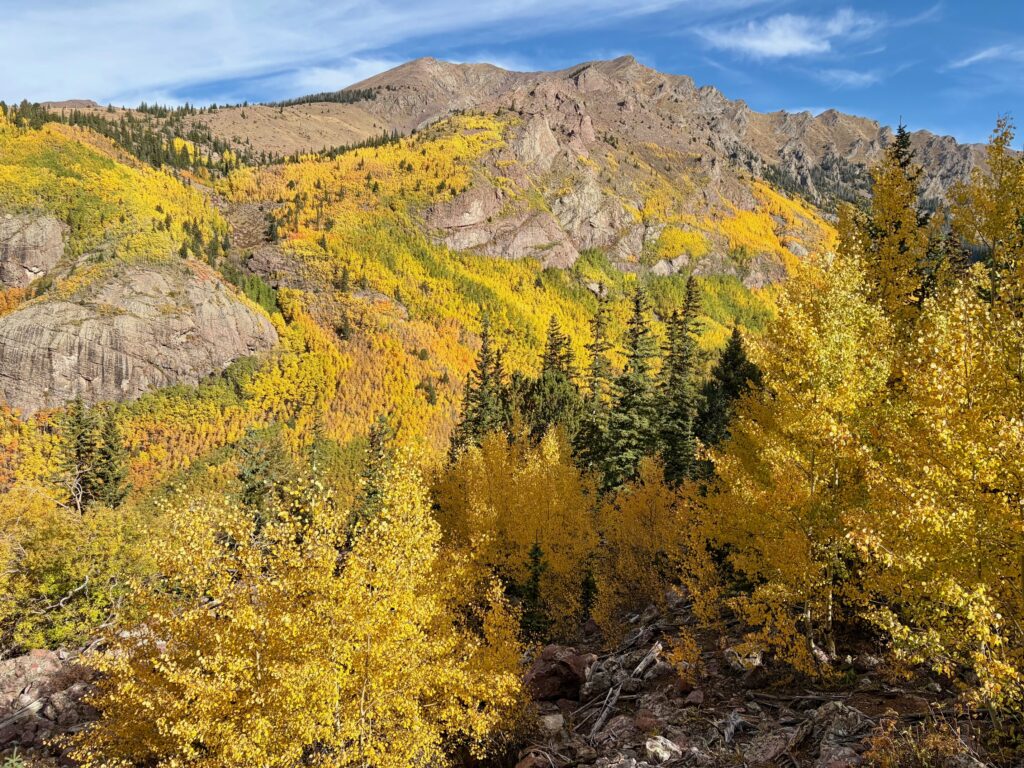
It was the last Saturday in September. I’d just returned from my final guiding assignment of the season, Yellowstone, on Wednesday. I was so excited to be back home with Troy; excited to get out for long days in the mountains as we love to do. Colorado was having an exceptionally beautiful display of autumn colors and I was relieved I’d made it home in time to enjoy it.
We’d planned on Pyramid Peak, one of the Sangres 13ers we hadn’t completed yet. At 5300’ of vertical gain, it’d be a challenge as I hadn’t completed a day like that in about a month, but I’d been backpacking daily during that time so it didn’t feel like too much of a stretch.
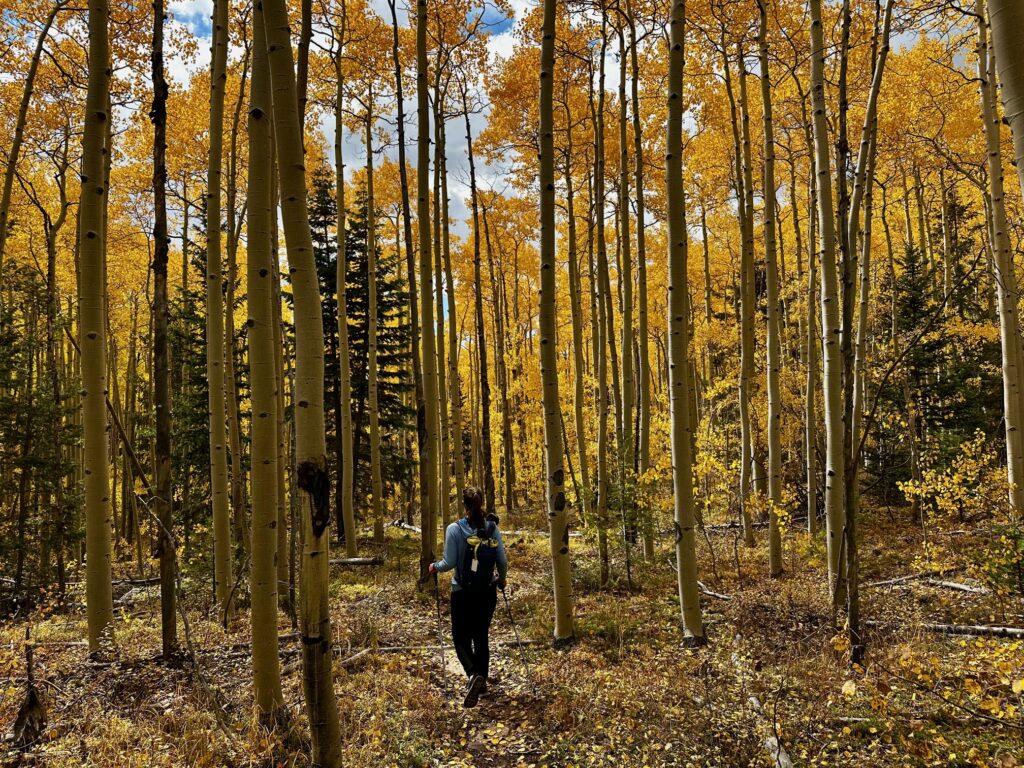
The day started beautifully: a cool, crisp trail winding along a creek through the changing aspens down low. Near the 10,000’ topo line, we veered off trail and started ascending more steeply towards the summit, still 3000’+ of climbing away. Trudging up towards the treeline on a 40-degree slope, my legs turned to lead and my heart hammered in my chest. Just keep going, you’ve got this, I encouraged myself, trying to stay positive.
Troy was pulling away ahead of me. He reached a shoulder and waited for me to catch up. “Everything okay?” “I feel awful,” I blurted out, “Empty.” “Do you want to take a break?” “I’m fine” my Pride responded. He shrugged and we pushed on. Again, he pulled away. Wallowing in my frustration and self pity, I dragged my limbs up the slope, stumbling over rocks and my own resentment. Today was supposed to be fun. My first day back at home, in the mountains with Troy. Why am I so utterly drained?
Troy waited, and again I slowly caught up. “Are you sure you don’t want a break?” “Fine,” I replied dejectedly. I didn’t want to take a break, but I needed to. I slumped down in the tundra and stared blankly into the San Luis Valley, a beige mirage thousands of feet below. I didn’t want to be grumpy. I didn’t want to take my frustration out on him. I wanted my body to cooperate. I wanted to feel strong. That was me; not these heavy legs, this lack of energy. I should be able to do this. My mind shuffled through a rolodex of mental snapshots. Moments when I felt strong, powerful, virtually limitless in the mountains. Why am I struggling so much?
My mind began the familiar mental inventory of all the things I could have or should have done differently that might have affected my physical performance that day: maybe I’ve been eating too much dairy, or not enough antioxidants; maybe it’s because I haven’t been taking my supplements all summer; maybe I had too much caffeine this morning; maybe I had too much blue light exposure before bed… and on and on. Dissecting every minutiae of the day to figure out how to fix the problem (my body).
Beneath the frustration of this outing, and the true root of my foul mood, was the fear that I was right back where I was last winter (and where I’d been many times before), in the worst autoimmune flare I’ve ever experienced, unable to ski uphill more than a few thousand feet without being so fatigued I needed to go home; unable to ski downhill even a lap or two without my muscles aching. Feeling victimized, angry. It was the fear that I was back where I was in 2014, post-PCT, when I couldn’t even run a few miles without my muscles burning, even though I’d just hiked 2600+ miles. Why won’t my body just cooperate? This repeated scenario rattled the deepest part of me: my identity; my life-long self concept as “strong and capable.” If I wasn’t that, who was I? What value did I have?
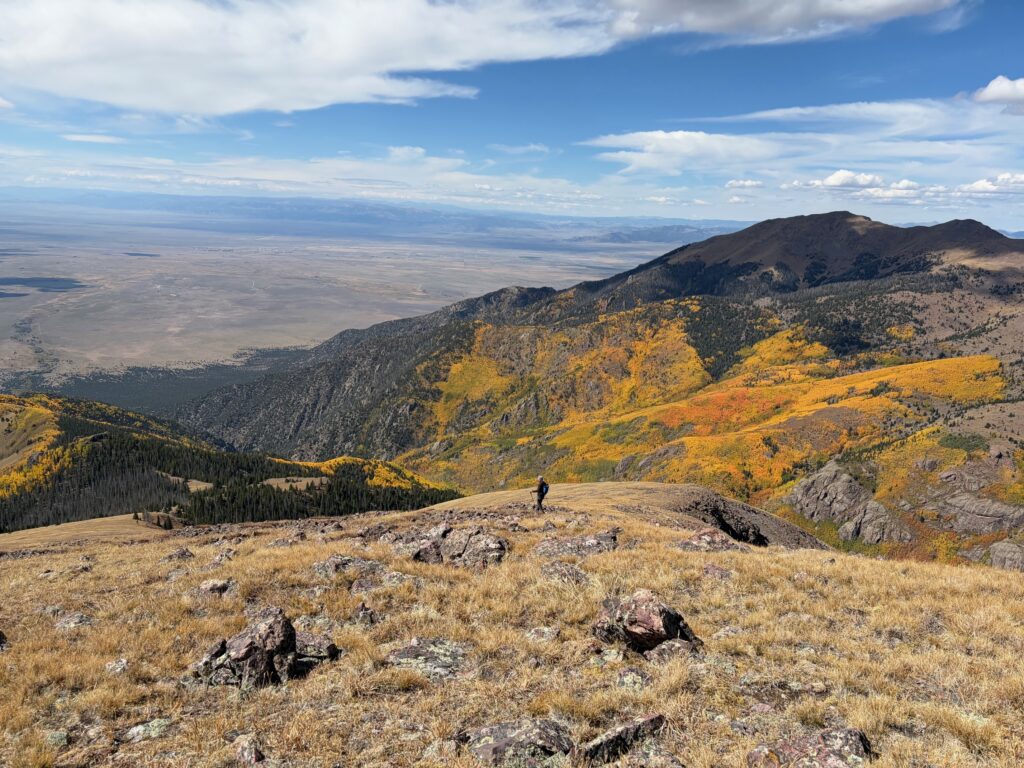
Troy tried to comfort me, offering me snacks and kind words. “We can turn around here. It’s no big deal. And look how beautiful it is.” I looked up, actually seeing what was around me for the first time since starting the off trail ascent. Aspen trees covered the hillsides and ridges in every direction. Their leaves glittering orange, red, and gold in the autumn afternoon light. I was so stuck in my head, in my frustration, that I hadn’t even noticed. Here I was, in one of my favorite places, at the most perfect time of year, with the person I loved most, not enjoying a single moment of it.
The Health Hustle Rabbit Hole
I thought about the whole arc of my health journey from the desperation to control to the eventual surrender to my body’s cycles. It’s been a decade since I found out about the Hashimoto’s, an autoimmune thyroid condition. The crushing fatigue, the inexplicable weight gain, the cold hands, the hair falling out, the inability to effortlessly run for hours in the forest as I had before. That’s when I first felt the frantic desire to “figure it out,” to “fix” my body, ashamed that I could no longer “perform” in the mountain.
After bloodwork confirmed my thyroid and adrenals were dysregulated, I went down the rabbit hole, spending hours on PubMed reading research articles, pouring through books, consuming dozens of hours of information from medical experts. I was willing to try anything and everything to get my body back to normal. I eliminated any food I may have an intolerance to. I ordered hundreds of dollars worth of supplements and blood tests. I said “No” to dinners with friends, unsure if there would be anything I could eat. I avoided hiking with others, not wanting to slow them down if I was having a “bad” stamina day.
The nutrition, sleep, and supplement protocols I implemented were largely successful, but the path wasn’t linear; it looked like a topographical map of a mountain range—peak, valley, peak, valley. Improvement, setback, improvement. I thought I’d get better and stay better, but it was more complicated than that.
Despite massive leaps forward, this time was also marked by desperation, grasping to attain and maintain the health of the capable outdoors person I knew myself to be. Every 6-12 months when I would get my bloodwork done, I’d be anxious to see the result, knowing it had the power to alter my mood for days. It might look great, or it might send me into a tailspin of What did I do wrong? What else do I need to change? Why can’t I figure this out? I need to try harder, control more. I’d wrack my brain, trying to make sense of things. Maybe I accidentally ate gluten. Maybe it’s that I’m spending too much time in front of screens or not enough time outside. Maybe I need to cut out nightshades. Maybe it’s mold, or a hidden virus.
Eventually I hit a breaking point. The health hustle was too much. Exasperated and confused during a particular low point, I asked myself, “Even if I never figure this out and my body never gets better and I’m never able to do what I used to be able to do, can I be okay with that? Can I find a way to enjoy the outdoors and be okay with myself?” I had to let myself think through this worst-case scenario and decide that, “Yes, I could be okay with that.” Facing that allowed me to begin to break free of the pursuit of perfect health.
At this point, I’d been through enough cycles of progress and setback to understand the ways in which my pursuit of health had become its own prison. It was costing me time, money, connection, and, above all, peace of mind. I came to terms with the fact that sometimes, despite doing everything “right,” the body operates on its own timeline.
The Stress Epiphany
Back on the tundra choking down a dry peanut butter sandwich between sobs, Troy attempted to console me. “You’ve had a really busy summer. Your body just needs some rest. This doesn’t mean anything about you or your capabilities. We both know you can still kick my ass up this mountain. And even if you couldn’t, that doesn’t mean anything about how amazing you are and how much I love you.”
He said to me the things I needed to be saying to myself. I reflected on the busyness of the preceding six months. Since late April, I’d spent 70 days in the field guiding (not including travel), across four different locations, and also squeezed in a 14-day walk across Iceland. And then there was the persistent underlying stress of my mom’s declining health always in the back of my mind, along with several smaller “death by a thousand cuts” type incidents, such as losing my phone in a stream midway through my Yellowstone guiding assignment.
As I sat there, I realized this wasn’t just a bad day; it’s a pattern that started in 2014 and which has revisited me at various times and with varying degrees of intensity since: most of my “health crashes/autoimmune flares” root back to stress. I thought back to the previous winter, one of the worst “flares” I’d had in decades. It started with a cold from which my body never fully recovered and which snowballed into a season of struggle.
A journal entry from that time:
“I’ve been in a cocoon this winter. My former self melting into a puddle, unclear what forms it’s to take next, unknown transformations happening beneath the surface. It’s been painful and confusing. I’d like to be skiing this morning, but my body will not allow it today, so I guess this is the day I finally sit down to write up this post that has been on my mind for months. The intention of sharing it on the blog is to be a resource for others who deal with Hashimoto’s disease and the flare ups, or anyone who’s familiar with the non linear healing journey, or anyone whose self concept is one of ‘strength, endurance, doer of hard mountain things’ and they find their body uncooperative in the pursuit of their identity-defining features. Alchemizing this shitty thing into something useful.
Since about mid-November (2024), or at least since Thanksgiving, I’ve not been doing well. In addition to getting sick, I was immediately plunged into a heavy workload. My resting heart rate was through the roof (for me); similarly my heart rate variability in the low-30s had rock-bottomed (for me). On the days I went out to ski uphill at Monarch with Troy, I was exhausted, dragging ass up the hill; a far cry from my normal endurance base. When I skied down, my leg muscles searing so bad that I had to stop multiple times on a short run to keep from collapsing. I’m frustrated and disheartened by my fatigue, my inability. This time has not only been extremely challenging on a personal level but extremely hard on my relationship with Troy as well.”
Gazing out across the valley, I thought about how I am an expert at the ‘I’m fine’ lie, ignoring quiet signals until they became screams. I tell myself, and I truly want to believe, that stressors aren’t affecting me, but the body doesn’t lie. This denial leads to overextending myself emotionally, mentally, and/or physically.
And much to my dismay, there’s no quick fix for creating a true and lasting sense of nervous system safety. You actually have to do the hardest work of all: listening to your body and slowing down. Choosing to rest, or turn back, when your ego wants to push through. It’s easier to try to supplement your way out when what’s really being asked is to address what’s not working in your life and what your body is actually asking for (e.g. rest).
I tried to internalize Troy’s reminder: even if you aren’t the strongest, you’re still valuable. While I rationally know this to be true, it’s taken years of reprogramming to actually believe it and embody it. Whether it’s Hashimoto’s, aging, or injury, we all eventually face this gap between who we think we are and what we can physically do. How we respond to that gap – whether we choose to fight it, deny it, or come to peace with it – shapes how we move forward.
“Should we head down and head to the hot springs?” Troy asked. Internally I protested for a moment, wanting to say “Let’s keep going. I can do it.” I exhaled deeply, a weight lifting off my chest, “Let’s stay a bit longer and enjoy the trees, then we can head back. I’m bummed but I guess the summit will be here for another time.”
As I soaked in the hot water, staring up at the golden ridgeline we’d just come from, I considered this winding journey I’ve had with adapting to these health complications that have affected my sense of my endurance, strength, identity, and ultimately, value.
Throughout this 12-year journey, there are a lot of practical tools I’ve learned that have helped me to recover faster, hike longer, and generally enjoy my time in the outdoors more. I’ll cover those in Part II. But it’s using these tools in conjunction with the right mindset that make navigating inevitable body changes a source of resilience and wisdom rather than frustration and desperation.
The Mindset Lessons
If you find yourself on your own version of that tundra, here is what I’ve learned to be most impactful in navigating this path:
- Redefine success. A good day in the mountains no longer has to include a summit, big miles, pushing through, or feeling strong. Similarly, the destination with the “health tools” I employ isn’t glowing health. Time well-spent outside includes presence and appreciation for nature; listening to my body and honoring my needs. It’s about enjoying time with people I like, eating good snacks, drinking from creeks, soaking in the sun, and generally reveling in the gift of being in this body while I can. “Success” is doing what I can to support my body’s health as much as possible but not beating myself up if I can’t climb or hike as hard as I used to; it’s being able to still enjoy the outdoors no matter the state of my body.
- No comparison allowed. The only person whose experience I can fully understand is my own. It’s a waste of mental energy to feel self-pity because I’m dealing with a certain set of circumstances that others aren’t. Or envy that another person seems to be having an easier time moving through the mountains than me. The “no comparison” rule also applies to comparing myself to past versions of myself. I’m in the body that I’m in now and that’s all that actually matters.
- Come back to gratitude. Always a powerful tool for shifting perspective. It’s only in hindsight that I could see how much I took my functional body for granted. Instead of sadness for what my body can’t do, how about appreciation for what it can do? Or even gratitude that I have a body at all.
- Remember why I love being outside. Instead of a stage on which I perform athletic feats, it’s a place to feel grounded, clear, and free; to reconnect with myself; to shake off the mundanity and distraction of modern life; to be part of nature; and to have fun and play.
- Accept what is. This is the recognition that, like nature, the body has cycles. It’s naïve and immature to expect the body to only get stronger when the biological reality is that we’re all on a slow, steady march towards death. This doesn’t mean that we don’t continue to push ourselves to do hard things or to take care of ourselves as well as we can. We do, but with more wisdom, grace, and inner attunement. We learn how to be adaptable and responsive to what’s present versus what we planned. It’s a more honest relationship with ourselves and with life.
While I know that it’s these mindset tactics that will help me navigate the next health valley with more composure, trust, and wisdom, there are specific tools I’ve used to support my body and pull out of each slump faster, including this most recent one in autumn of 2025. In Part II, I’ll share the specific nutrition, sleep, and supplement protocols that help me manage my Hashimoto’s and stay in the mountains.


 not
not work
work long term.